

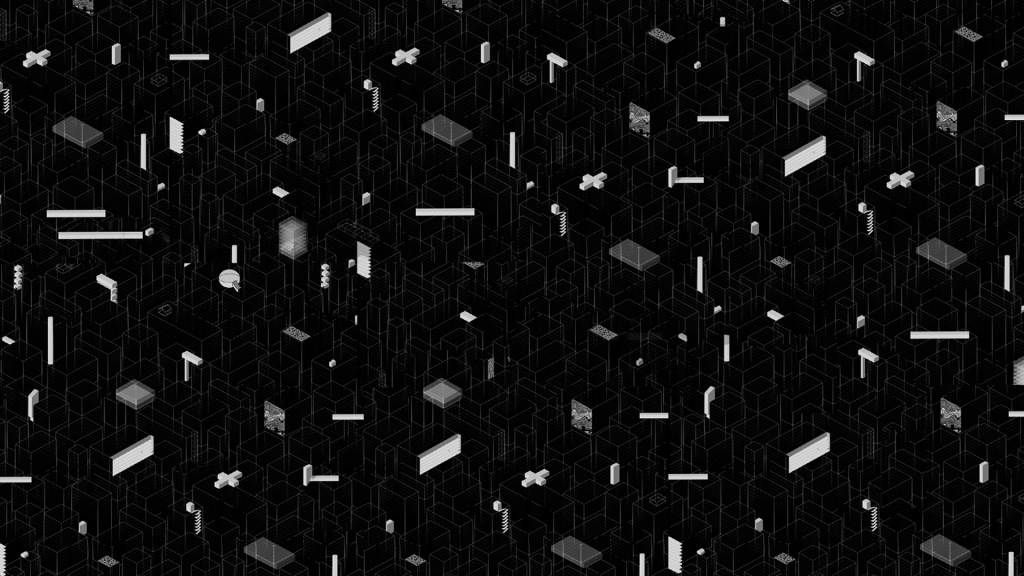
The Grafted City proposes a concept to map and reintegrate neglected spaces as crucial components of future urban development.
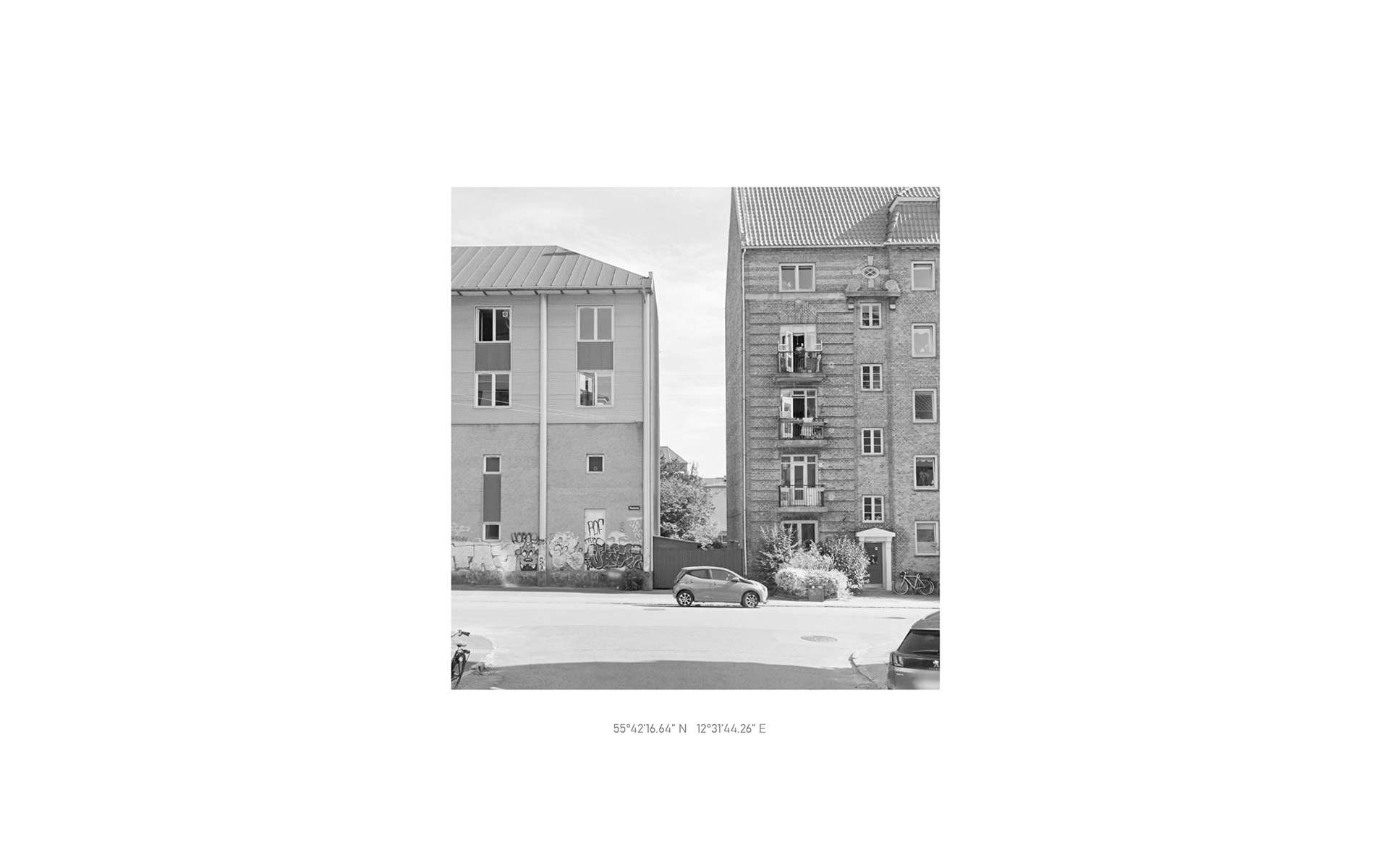
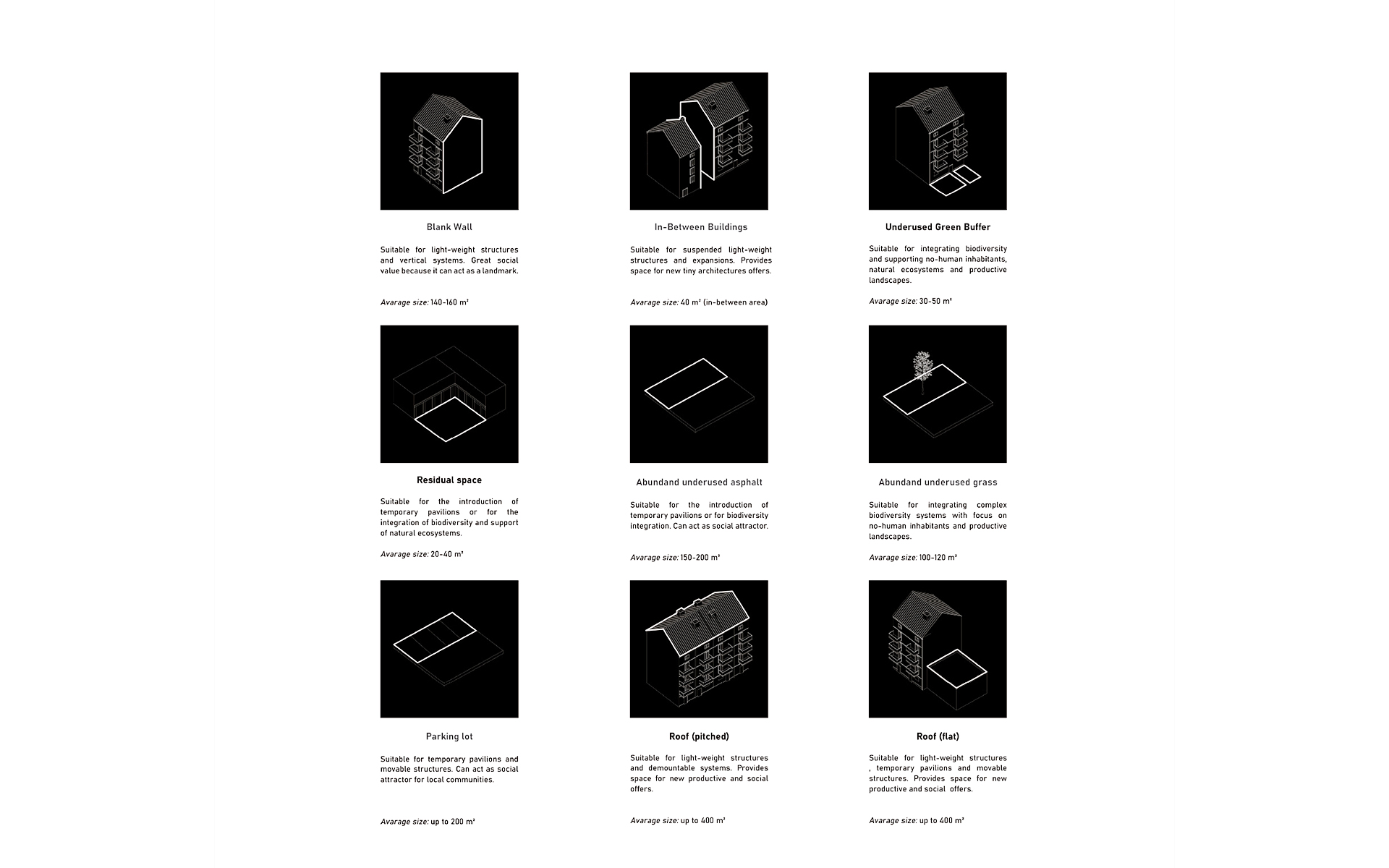
in many European cities, the area spanning between the old city centre and the suburban outskirts has experienced significant development over the past 50 years, resulting in a diverse array of urban typologies. This transformation has spontaneously produced a considerable number of neglected and underutilized spaces, here defined as “leftovers”. The Grafted City emerges from the recovery of these spaces and the creation of a network of lightweight architectural experiments as a means of triggering, testing and iterating new models of densification, space reclamation and sustainability.
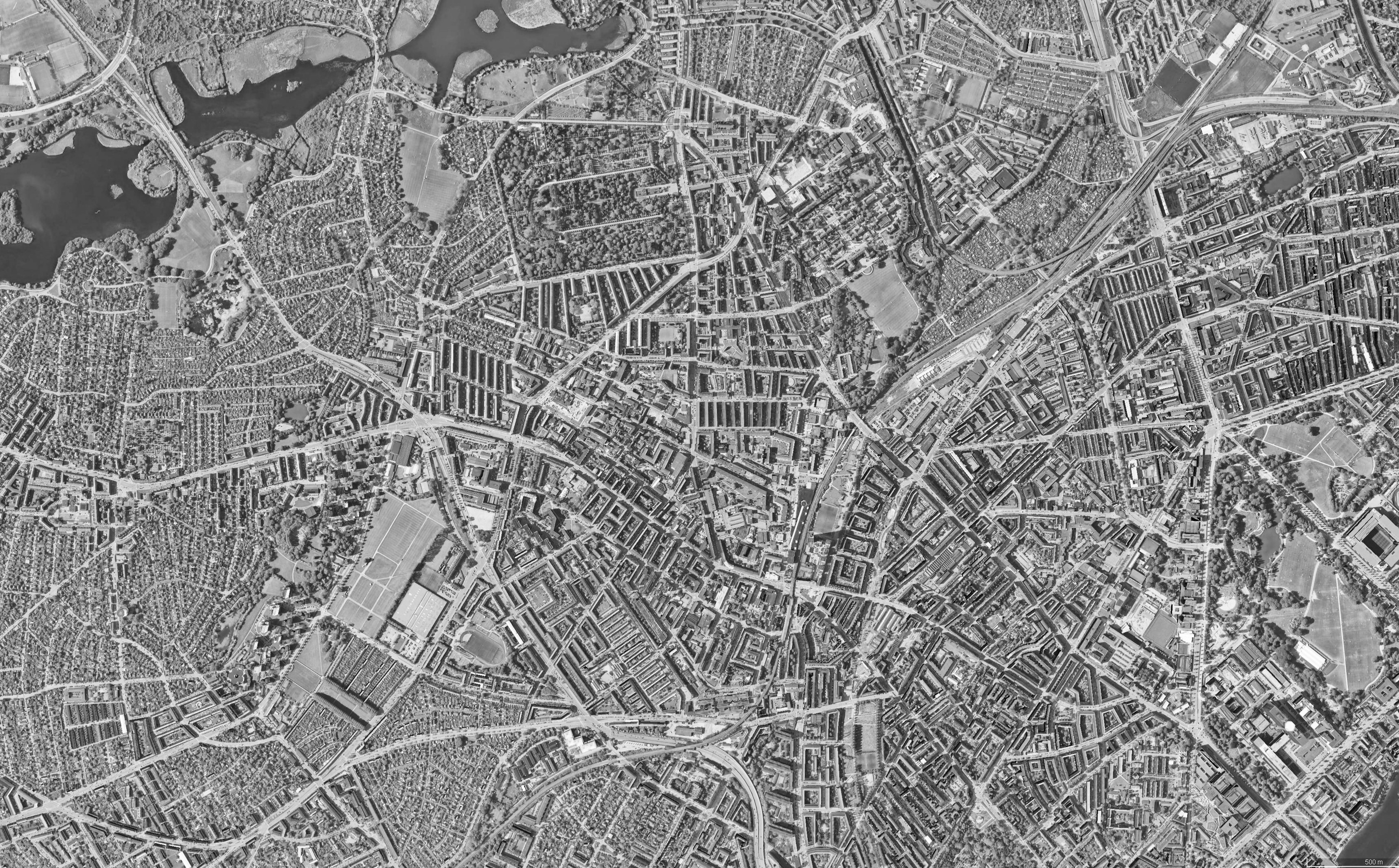
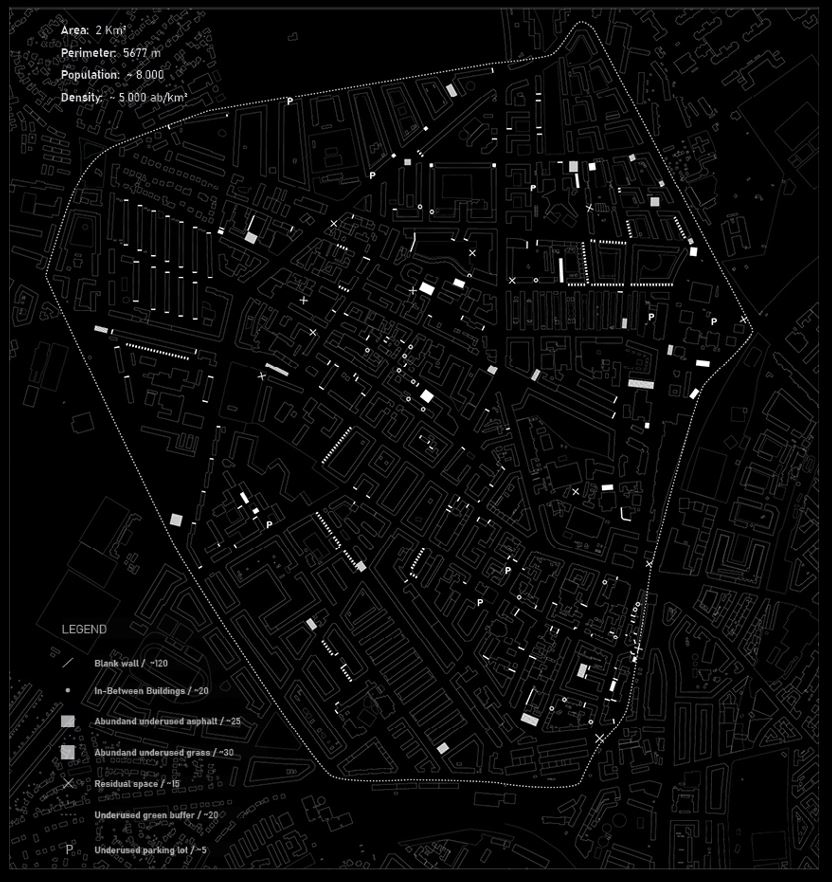
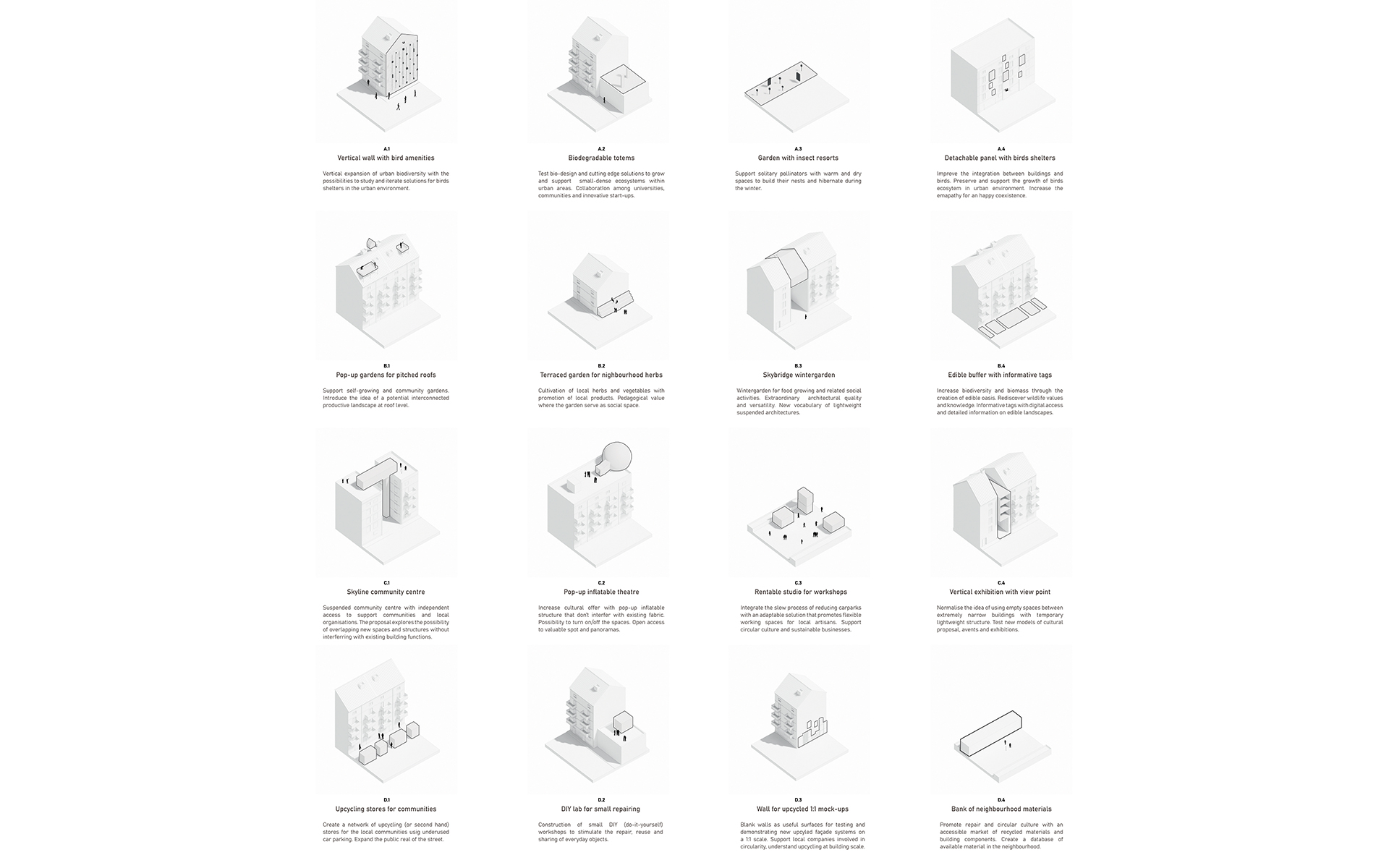
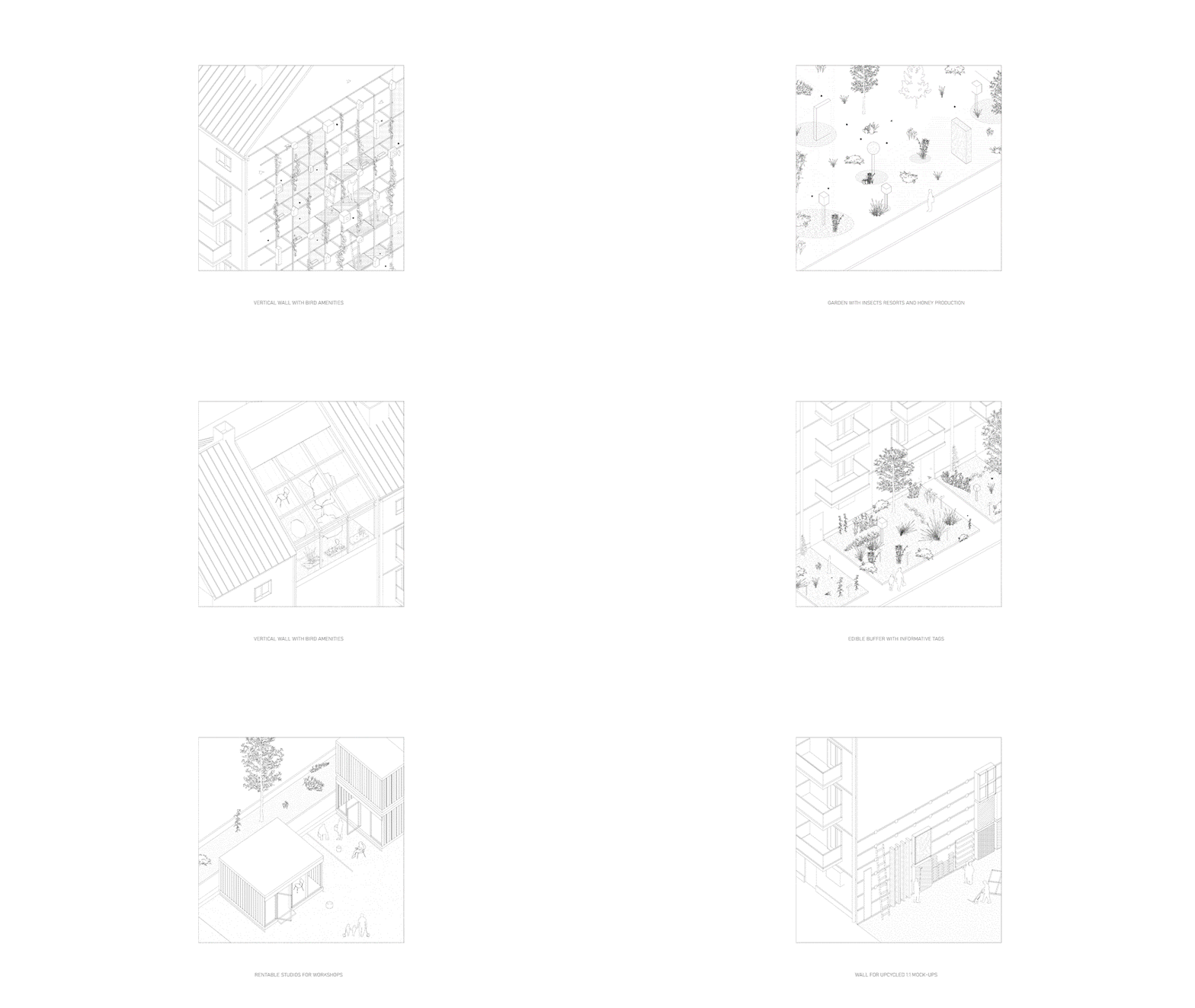
To explore the concept, two steps has been done so far: 1. A first mapping has been carried out on a 2 sqKm portion of Nordvest, Copenhagen. This survey identified over 200 underused spaces, spanning a potential usable area of 25,000-30,000 sqm. 2. A second step explored the spatial potential of these spaces through 16 prototypes that focus on providing spaces for cultural activities and local communities, food production, greenery, and biodiversity. This first approach helped to demonstrates the abundance and the richness of this spaces.
TYPE: Design Research, Architecture
LOCATION: Copenhagen, Denmark
YEAR: 2022
TEAM: Alberto Roncelli
AWARDS : / 1st prize, Superscape Competition, 2022 / Selected for LINA Fellowship 2023

© 2026 All rights reserved
 Roncelli Studio